
A form for a public place — designing public art for the State of Qatarشكلٌ لمكان عام — تصميم عمل فني للفضاء العام في دولة قطر
Designing permanent public art for the State of Qatar meant solving a hard problem — how do you extend the language of a celebrated national artist into something new, and prove it as a real object before a single stone is cut? Here is the challenge, and what we did.تصميم عمل فني دائم للفضاء العام في دولة قطر ليس مجرد تمرين بصري؛ بل هو تحدٍّ في ترجمة لغة فنان قطري بارز إلى عمل جديد، قابل للتنفيذ، ويمكن تقييمه واعتماده قبل أن تتحول الفكرة إلى مادة وحجر ومعدن.
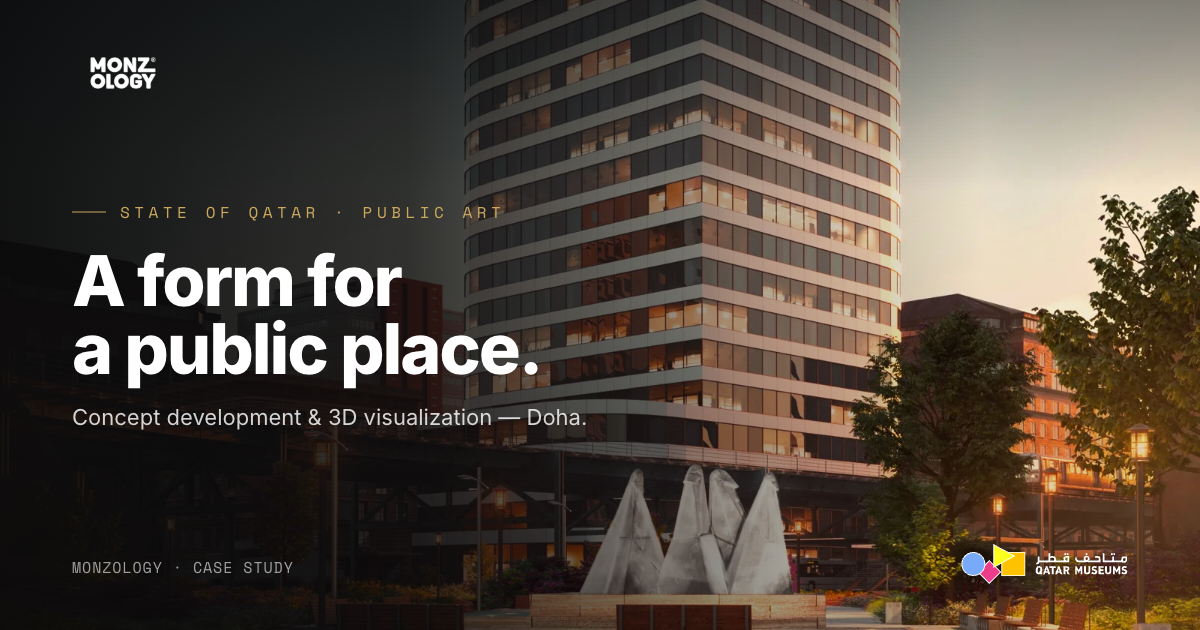
In 2020, the State of Qatar — through Qatar Museums — set out to enrich the public spaces of Doha's Corniche, and invited the country's own artists to imagine what could stand there. In association with Barazanji Studios, Monzology was asked to help develop a concept and visualize it in 3D. What looks, from the outside, like "designing a sculpture" was in fact one of the hardest kinds of brief there is.
Here is why — and what we did about it.
Why this mattered
Public art is not a campaign. A campaign runs for a season and disappears. A sculpture on the Corniche becomes a permanent part of how a country sees itself — seen by millions, every day, for decades.
The stakes are civic, not commercial. Get it right and it belongs to a city. Get it wrong and everyone lives with it. That weight sits on every decision, from the very first sketch.
The challenge
The brief carried three hard problems at once.
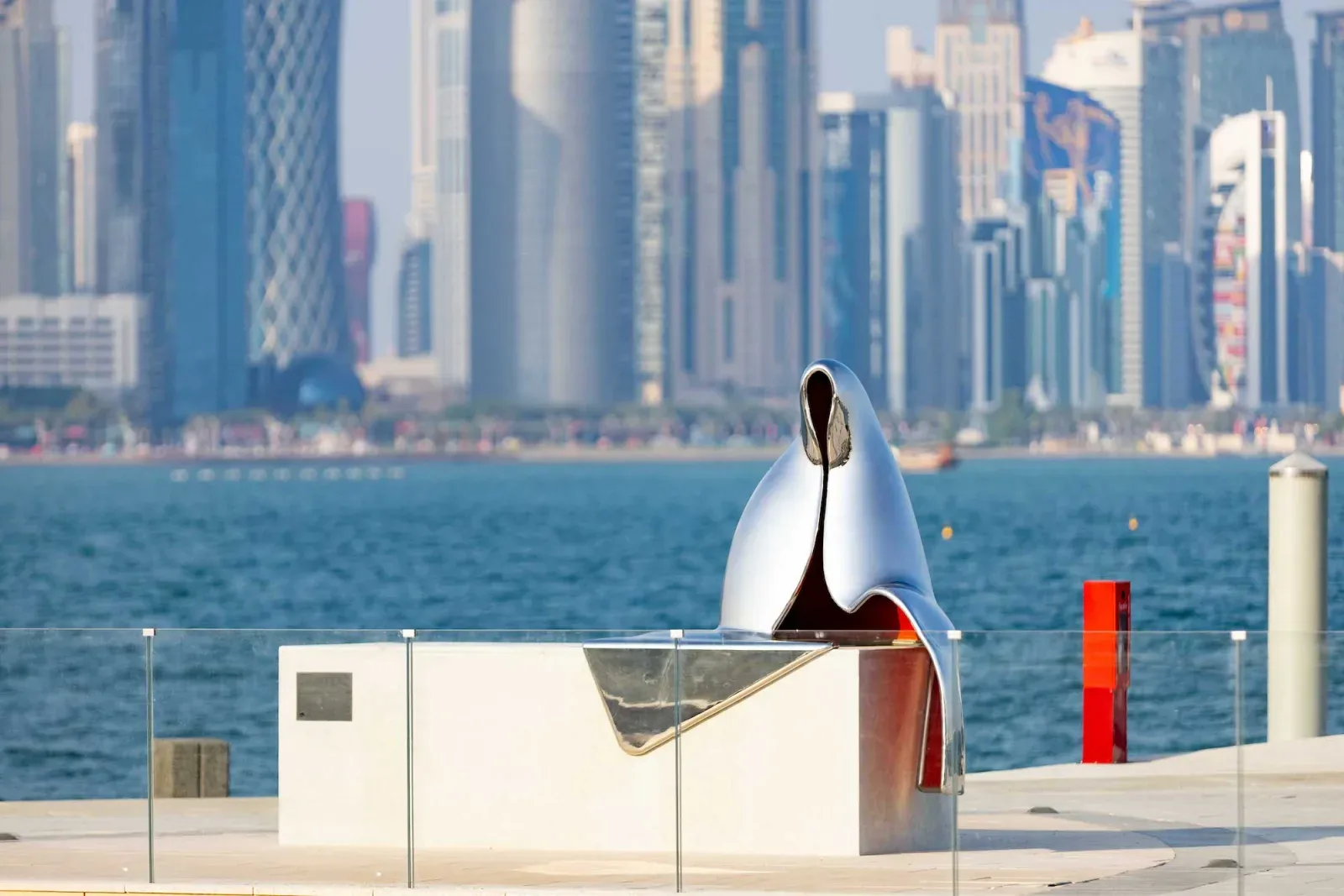
- Honour a language without copying it. Our creative reference was the sculptural voice of celebrated Qatari artist Salman Al-Malek — whose reflective, flowing forms already stand on the Doha waterfront. The task was to extend that language into something new, not imitate it. Respect and originality had to live in the same object.
- Make abstraction legible. An abstract form has to speak clearly to two very different audiences at once — a committee judging it as art, and a public walking past it every day. It had to read.
- Prove it before it exists. A permanent artwork is approved on paper long before it is built. The concept had to be convincing enough to be judged, defended and believed in — as a real object, in a real place — without a single stone being cut.
Take a language you respect — and ask where else it could stand.
What we did
We started from the artist's language, and asked one question: where else could it stand?
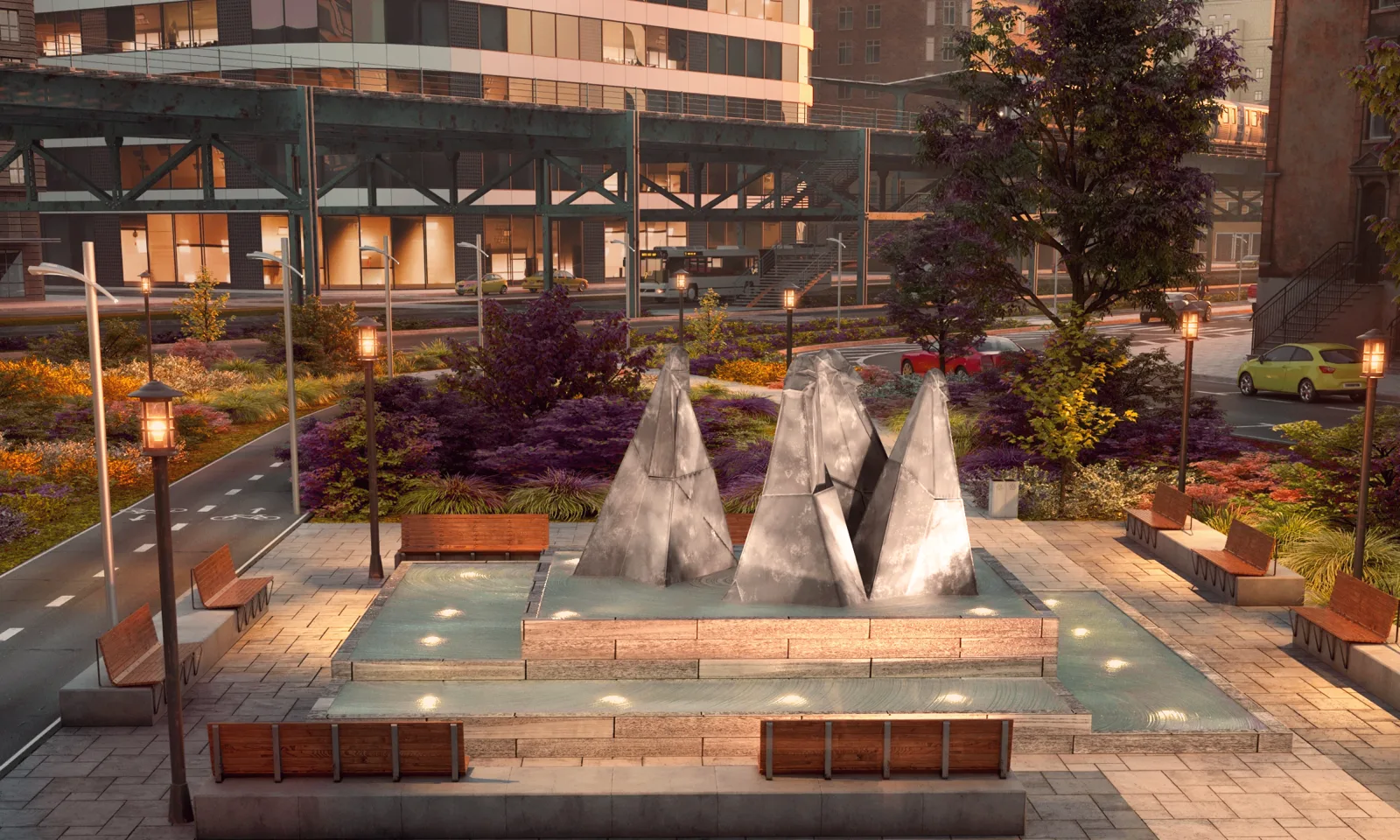
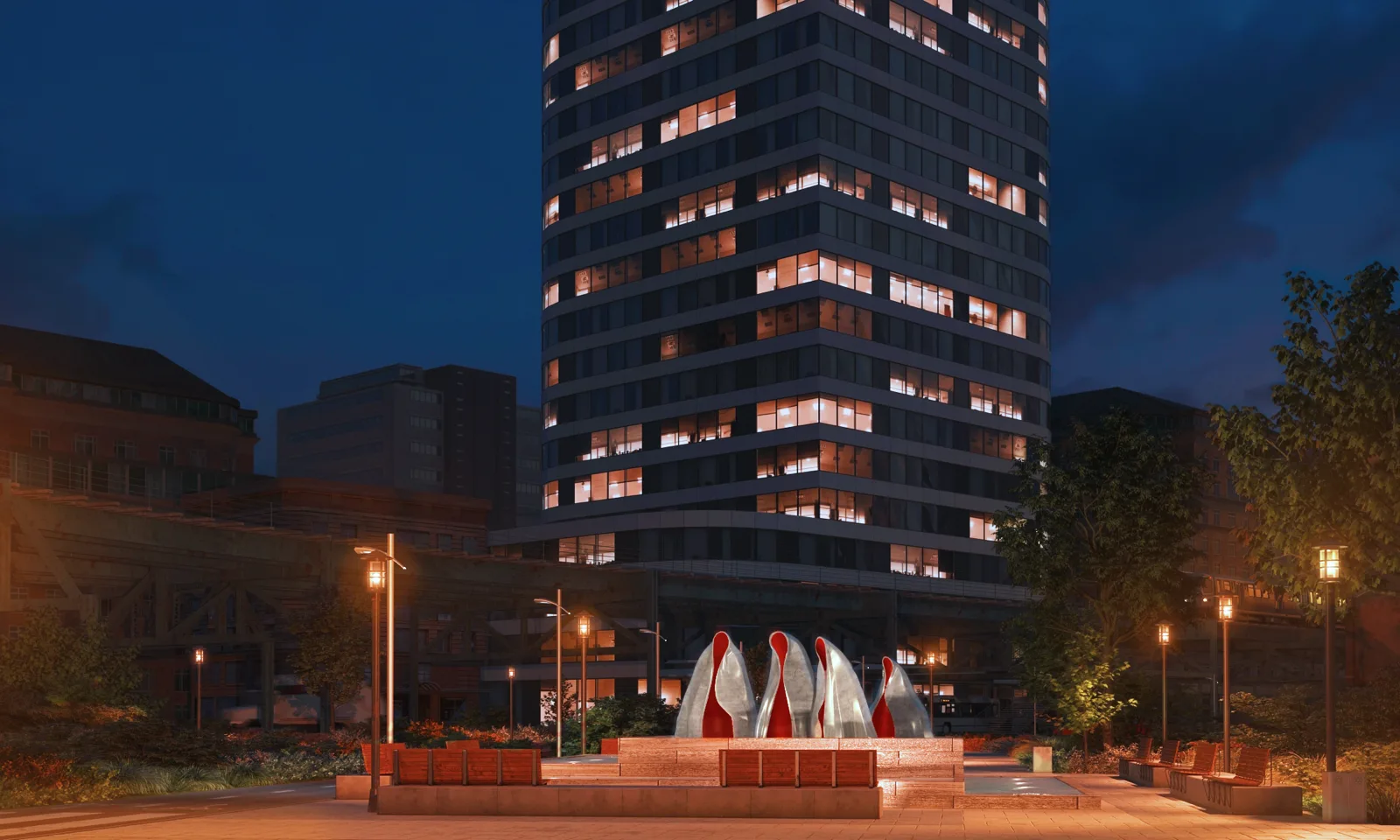
The concept we developed reads two ways at once — as a gathering of veiled figures, and as a range of peaks. An abstract human form in reflective metal, with contrasting colour and water brought into the setting. The first material study grounds it in brushed, patinated metal — solemn and civic, a form you would walk quietly around.
Then we made it real enough to judge. We explored two material directions across 13 concept renders — brushed metal and water by day, polished chrome lit by colour at night — and staged each one in real settings, at eye level and from above, so the committee could weigh it as an object in the world, not a drawing on a wall.
3D visualization by Hany Abdelkhalek.
Why it was hard — and why it was worth it
Abstraction is the riskiest brief in design: there is nowhere to hide. Public space is unforgiving — no second screen, no scroll, no A/B test to fall back on. And you are designing for permanence, for a nation, referencing an artist the country already loves. Every one of those raises the bar.
That difficulty is exactly the point. The hardest part of public art is not the making — it is earning the right to be made. Before anything is built, an idea has to survive a committee, a context, and a country's sense of itself. Concept development and 3D visualization are how an idea does exactly that: how it becomes real enough to judge, to defend, and to believe in.
That is the work we love — taking an ambition and a language, and giving them a form you can stand in front of.
A form for a public place — told in reflective metal, colour and water.
Client: State of Qatar · Qatar Museums — In association with: Barazanji Studios — Creative reference: Salman Al-Malek (Qatari artist) — 3D visualization: Hany Abdelkhalek
See more of what we make — explore our work — or start a conversation with the studio.
هذا هو التحدي الذي واجهناه — وهذا ما عملنا على تحقيقه.
لماذا كان هذا مهمًّا
في عام 2020، سعت دولة قطر — من خلال متاحف قطر — إلى إثراء الفضاءات العامة على كورنيش الدوحة، ودعت مجموعة من فنّانيها إلى تخيّل أعمال يمكن أن تصبح جزءًا من المشهد الحضري للمدينة.
وبالتعاون مع استوديوهات برزنجي (Barazanji Studios)، شاركت Monzology في تطوير المفهوم وتجسيده بصريًا من خلال تصورات ثلاثية الأبعاد.
ما قد يبدو للوهلة الأولى مجرد «تصميم لمنحوتة» كان في الحقيقة تمرينًا معقدًا في التصميم، والسياق الحضري، والهوية الفنية، والتصور البصري.
والسبب بسيط: الفن العام لا يعمل مثل الإعلان.
لماذا كان هذا مختلفًا
الحملة الإعلانية قد تستمر موسمًا ثم تختفي. أمّا العمل الفني في الفضاء العام، فيصبح جزءًا من المشهد الذي تراه المدينة كلّ يوم، وقد يبقى حاضرًا لعقود.
هنا لا نتحدث عن قرار تجاري فقط، بل عن قرار له أثر مدني وثقافي.
إذا نجح العمل، يصبح جزءًا من ذاكرة المكان. وإذا لم ينجح، يبقى حاضرًا أمام الجميع.
لذلك، كان كل قرار — من أوّل خطٍّ في الرسم إلى آخر تفصيل في التصور — يحتاج إلى مستوى مختلف من الدقة.
التحدي
كان علينا التعامل مع ثلاث مسائل رئيسية في الوقت نفسه:
- تكريم اللغة الفنية دون نسخها. كان المرجع الإبداعي هو اللغة النحتية للفنان القطري سلمان المالك، المعروف بأشكاله الانسيابية والعاكسة التي أصبحت جزءًا من المشهد الفني في الدوحة. كان المطلوب تطوير هذه اللغة نحو اتجاه جديد، لا إعادة إنتاجها. أي أن الاحترام للأصل والأصالة في النتيجة النهائية كانا شرطين متلازمين.
- جعل التجريد مفهومًا وقابلًا للقراءة. كان على الشكل المجرّد أن يتحدث إلى جمهورين مختلفين في الوقت نفسه: لجنة تنظر إليه باعتباره عملًا فنيًا، وجمهور يراه في حياته اليومية. لذلك لم يكن يكفي أن يكون الشكل جميلًا؛ كان يجب أن يمتلك حضورًا بصريًا واضحًا ويمكن قراءته من أكثر من زاوية.
- إثبات الفكرة قبل وجودها. في المشاريع الفنية الدائمة، يُتخذ القرار قبل التنفيذ بوقت طويل. لذلك كان على الفكرة أن تكون مقنعة بما يكفي لتقييمها، ومناقشتها، والدفاع عنها، وتخيلها في مكان حقيقي — قبل أن يُنحت حجر واحد.
خذ لغة فنية تحترمها — ثم اسأل: إلى أين يمكن أن تأخذها؟
ما الذي فعلناه
بدأنا من لغة الفنان، ثم طرحنا سؤالًا واحدًا: أين يمكن لهذه اللغة أن تذهب، إذا لم نحاول تكرارها؟
طوّرنا مفهومًا يمكن قراءته بطريقتين في الوقت نفسه: كتكوين من أشكال إنسانية مجردة، وكامتداد من القمم المتتابعة.
جاء الشكل من معدن عاكس، مع لون متباين وعنصر مائي يدخل في التكوين ليمنحه حركة وحضورًا مختلفًا.
في الدراسة الأولى للخامة، اتجهنا إلى معدن مصقول بالفرشاة مع معالجة معتّقة؛ اختيار يمنح العمل حضورًا رصينًا ومدنيًا، ويشجع المشاهد على التحرك حوله واكتشافه من زوايا مختلفة.
لكن الفكرة وحدها لم تكن كافية. كان علينا أن نجعلها حقيقية بما يكفي للحكم عليها.
لذلك استكشفنا اتجاهين مختلفين للخامة من خلال 13 تصورًا ثلاثيّ الأبعاد:
- معدن مصقول بالفرشاة مع الماء في إضاءة النهار.
- كروم مصقول يتفاعل مع اللون والإضاءة ليلًا.
ثم وضعنا كل اتجاه داخل سياقات حقيقية، ومن مستويات رؤية مختلفة — من مستوى العين إلى اللقطات العلوية — حتى تتمكن اللجنة من تقييم العمل باعتباره عنصرًا حقيقيًا في الفضاء العام، وليس مجرد رسم أو صورة على شاشة.
التصوّر ثلاثيّ الأبعاد: هاني عبد الخالق.
لماذا كان الأمر صعبًا — ولماذا كان يستحقّ ذلك
التجريد هو أحد أصعب أشكال التصميم؛ لأنه لا يترك مساحة كبيرة للاختباء خلف التفاصيل.
وفي الفضاء العام، لا توجد «شاشة ثانية» يمكن أن تعوّض الفكرة، ولا تمرير سريع يمكن أن يتجاوزها، ولا اختبار A/B يمكن أن يخبرك بما ينجح.
أنت تصمم لعمل دائم، في مكان حقيقي، لجمهور واسع، وبالاستناد إلى لغة فنان له حضور فعلي في المشهد الثقافي للبلد. كل عنصر من هذه العناصر يرفع سقف التوقعات.
وهنا تحديدًا تكمن قيمة التحدي. فأصعب ما في الفن العام ليس أن تصنعه، بل أن تجعل الفكرة تستحق أن تُصنع.
قبل أن يُبنى أي شيء، يجب أن تنجح الفكرة في تجاوز اللجنة، والمكان، والسياق، والوظيفة، والعلاقة مع الجمهور. وهذا هو الدور الذي لعبه تطوير المفهوم والتصوّر ثلاثيّ الأبعاد: تحويل الفكرة من شيء يمكن تخيله إلى شيء يمكن رؤيته، وتقييمه، ومناقشته، والدفاع عنه.
وهذا تحديدًا هو النوع من العمل الذي نحبّه في Monzology: أن نأخذ طموحًا ولغة فنية، ونمنحهما شكلًا يمكن للناس أن يقفوا أمامه.
شكلٌ لمكان عام — محكيٌّ بمعدن عاكس، ولون، وماء.
العميل: دولة قطر · متاحف قطر — بالتعاون مع: استوديوهات برزنجي — المرجع الإبداعي: سلمان المالك (فنان قطري) — التصوّر ثلاثيّ الأبعاد: هاني عبد الخالق
اطّلع على المزيد ممّا نصنع — استكشف أعمالنا — أو ابدأ محادثة مع الاستوديو.